A Theology of N-Dimensions
Kenosis, Perpendicular Ontology, and the Geometry of Creation
The Volume
Published · 8 × 10 in paperback and ebook
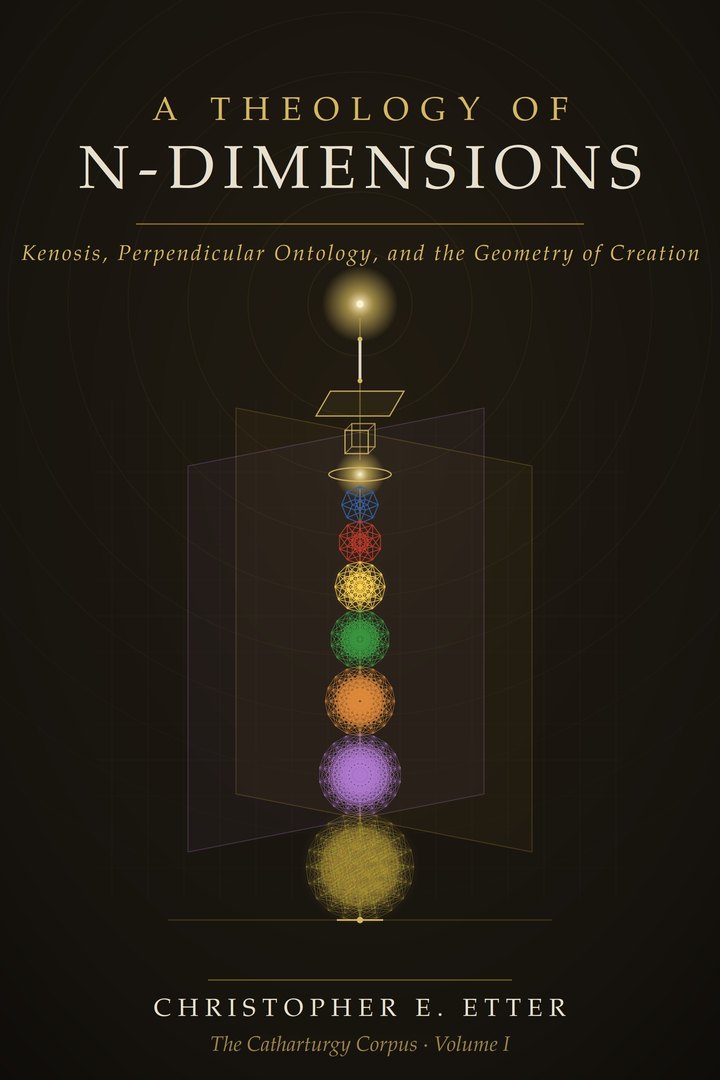
- Volume
- I of the Catharturgy Corpus
- Subtitle
- Kenosis, Perpendicular Ontology, and the Geometry of Creation
- Length
- 555 pages · 86 chapters · 8 parts
- Plates
- 15
- Format
- 8 × 10 in · print, EPUB, and Word
- Author
- Christopher E. Etter
Nothing can limit God but itself. From that single axiom, A Theology of N-Dimensions builds a theology of creation as divine self-limitation and reads the dimensions of the physical world as the forms that limitation takes. The first volume of the Catharturgy Corpus lays the ground on which the other three stand.
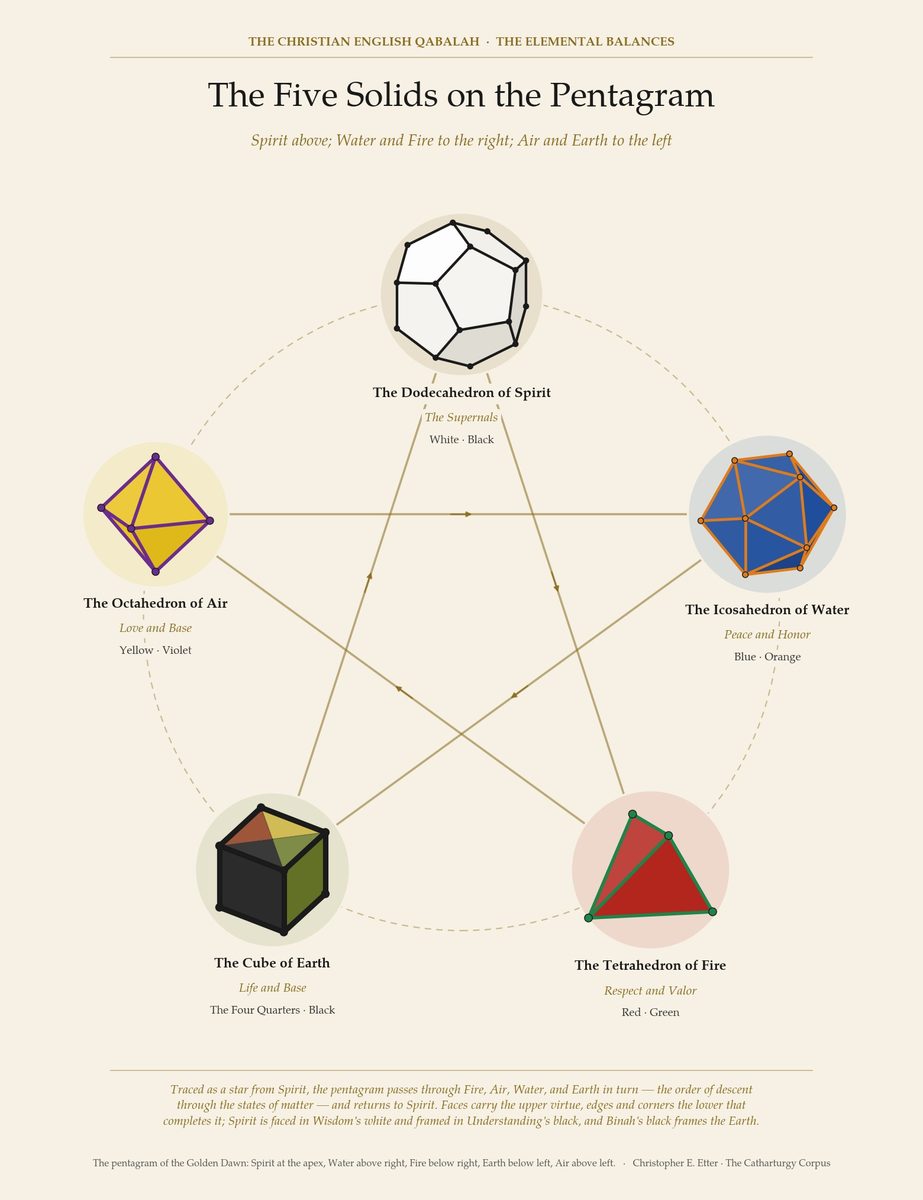
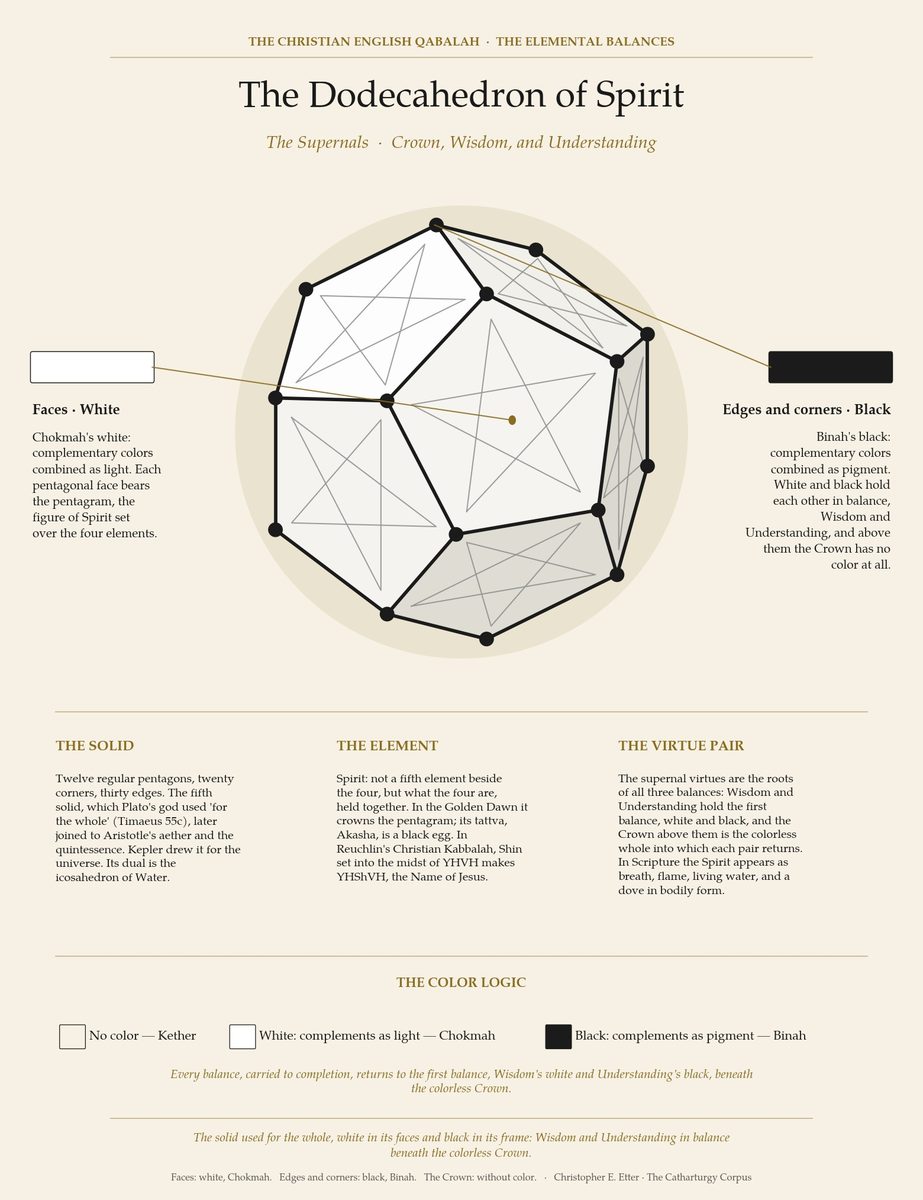
The book opens by asking what a dimension is and why theology should care, then states the axiom and the act it names: the withdrawal by which the unlimited makes room for what is not itself, the space so left bearing the figure of the Trinity, and the outpouring that fills it. From there it develops a perpendicular ontology, in which God, the soul, and the world stand to one another not as inside to outside but at right angles, and carries that ontology into physics and geometry: the regular solids and the primes that build them, the perpendicular frame, the limit of the perfect forms, the elemental solids on the Tree of Life, and the dimensional ladder that sets Ein Sof at the point and the Kingdom at the tenth.
Later parts turn to time, freedom, and the higher register; to the pattern and the method by which the Corpus grades its claims; to the descent of the divine through the created stack, with Christ at the bottom; and to a dialogical frontier where the theology meets Plotinus and Iamblichus, Maximus and Gregory, Böhme and Swedenborg, and the Daoist and Buddhist traditions on their own terms.
Its eight parts are Before the Axiom; The Axiom and the Act; Perpendicular Ontology; The Ground Beneath: Physics and Geometry; Time, Freedom, and the Higher Register; The Pattern and the Method; The Descent Through the Stack; and The Dialogical Frontier, with an appendix on the research beneath the chapters. Throughout, claims are graded: Found for what the sources and the science establish, Constructed for the correspondences the work proposes.
The Breakdown
the parts of the volume, with their chapters and pages
| Part | Title | Chapters | Pages |
|---|---|---|---|
| Part I | Before the Axiom: Why Dimensions, and What They Are | 1–4 | 1–38 |
| Part II | The Axiom and the Act | 5–10-L | 39–176 |
| Part III | Perpendicular Ontology | 11–16-A | 177–243 |
| Part IV | The Ground Beneath: Physics and Geometry | 17–24-D | 244–394 |
| Part V | Time, Freedom, and the Higher Register | 25–28-A | 395–419 |
| Part VI | The Pattern and the Method | 29–30 | 420–428 |
| Part VII | The Descent Through the Stack | 31–33 | 429–445 |
| Part VIII | The Dialogical Frontier | 34–36 | 446–524 |
One Station, One Dimension
the Tree of Life read as the dimensional structure of the world
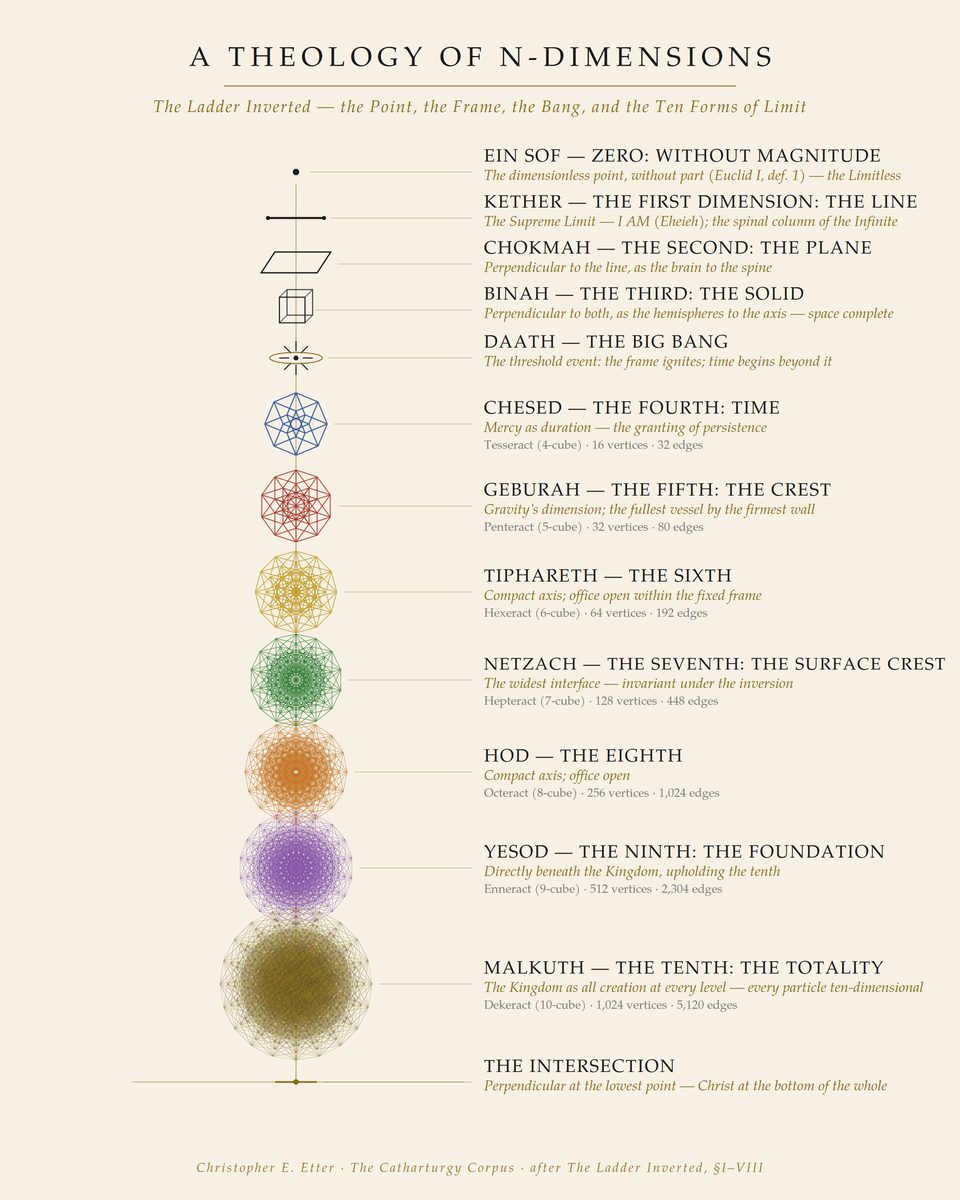
The volume reads the Tree as the tradition never quite dared: one station, one dimension. The Limitless is the dimensionless point of Euclid’s first definition. The Crown is the first act of limit, the form of the line. Wisdom and Understanding are the forms of the plane and the solid — and the supernal triad is not space at all: space is its absence, not its essence, the imprint of the Trinity in what God is not, the standing frame of everything.
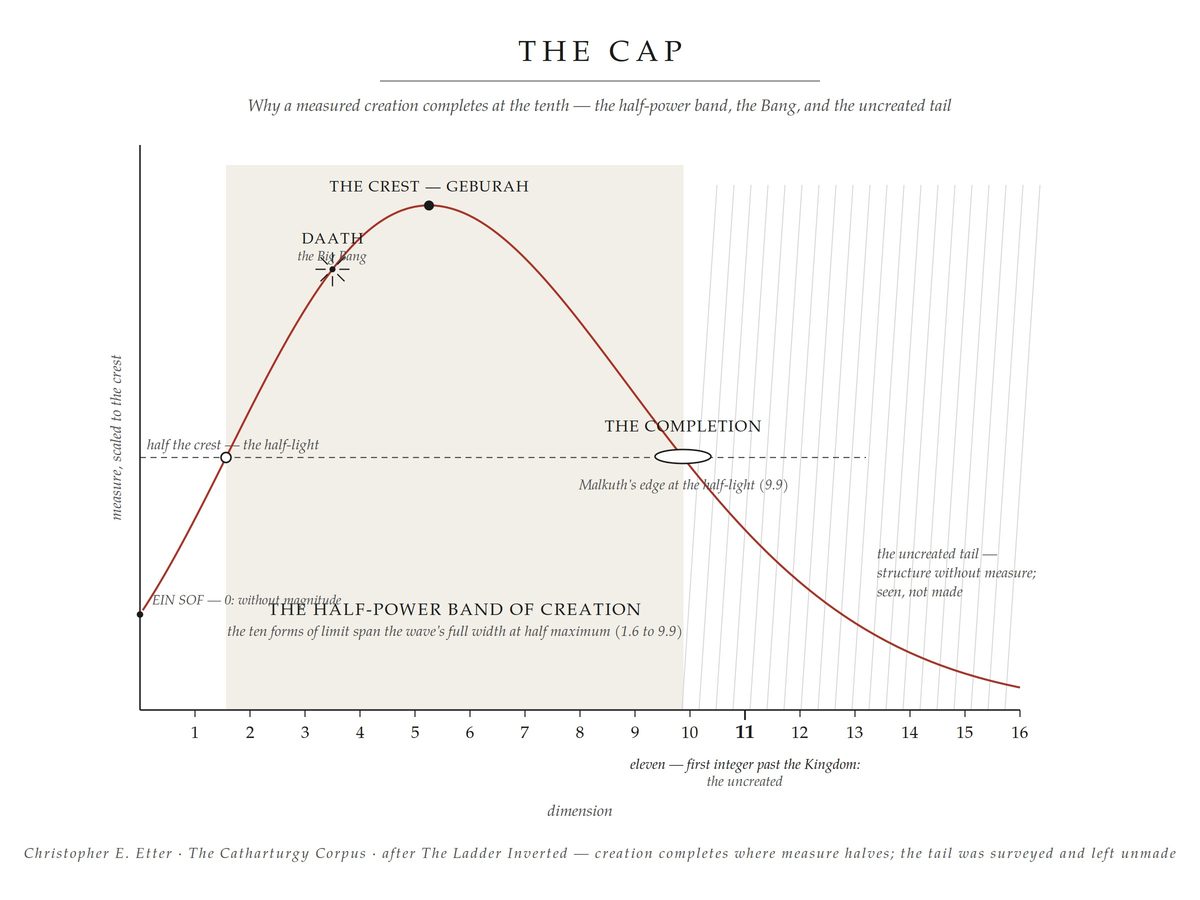
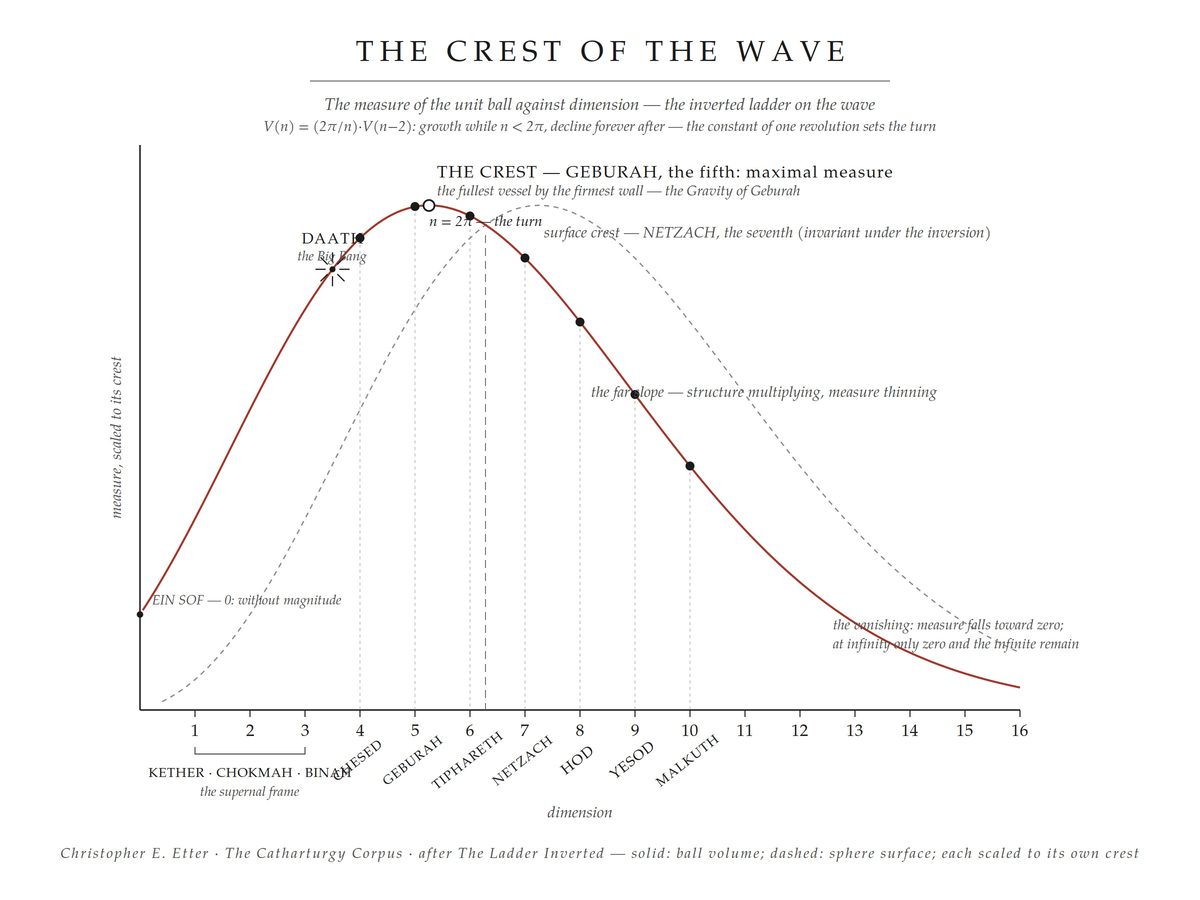
The hidden sphere is the threshold event — the Big Bang — where the frame ignites. Below it the created dimensions descend: Mercy is the fourth, which is time; Severity the fifth, the crest of contained measure, where gravity lives; and so down through the compact axes to the Foundation. The Kingdom is the tenth — and, against the tradition’s habit, not the lowest rung but the totality: if the higher dimensions are real, every particle of every body already carries all ten. The bottom of the ladder is its fullest figure.
The ladder was never a climb out of the world. Inverted and read rightly, it is the account of how the Limitless poured itself, dimension by dimension, into the world’s hands.
On This Site
the volume’s governing declaration and its geometric primer
- The Ladder Inverted — the declaration that governs the volume: the point, the frame, the Bang, and the ten forms of limit, with the full catechism, the wave, and the cap.
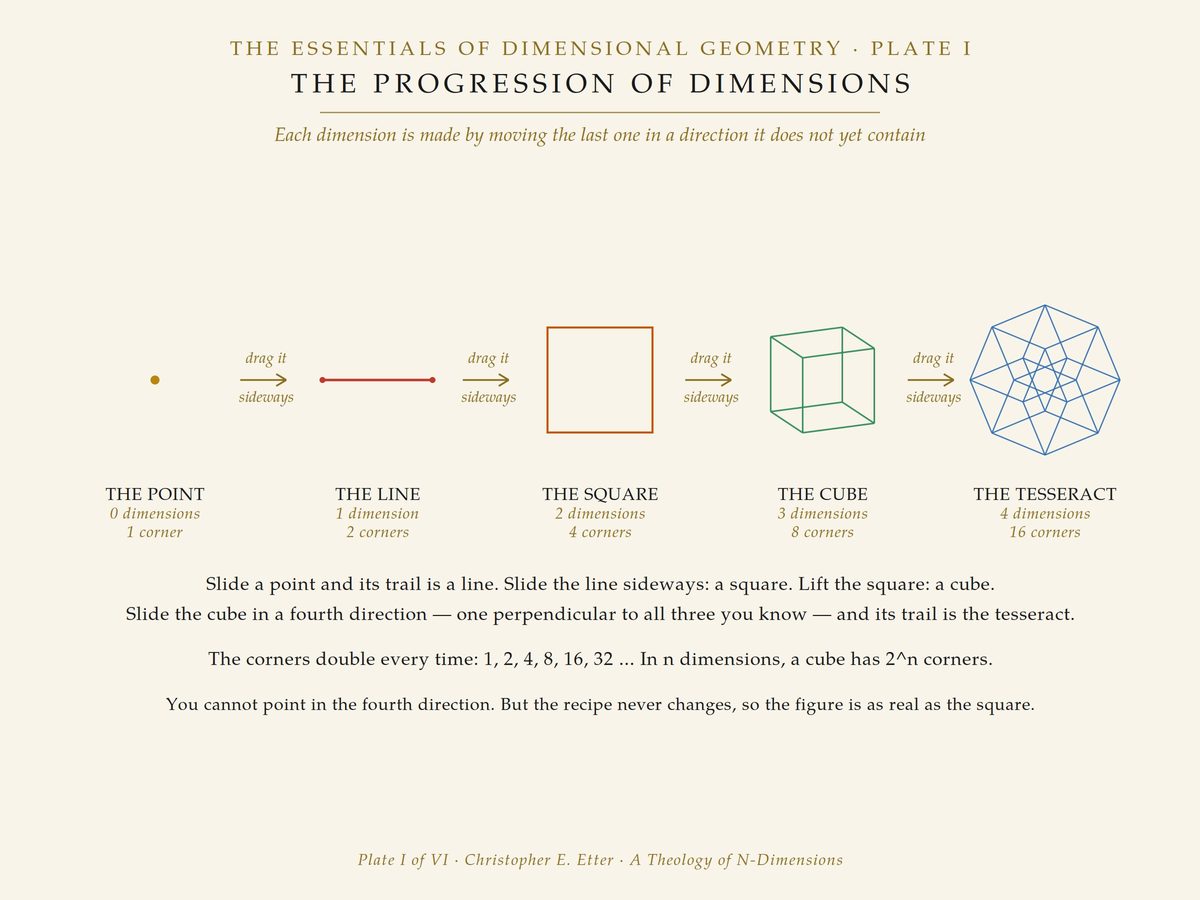
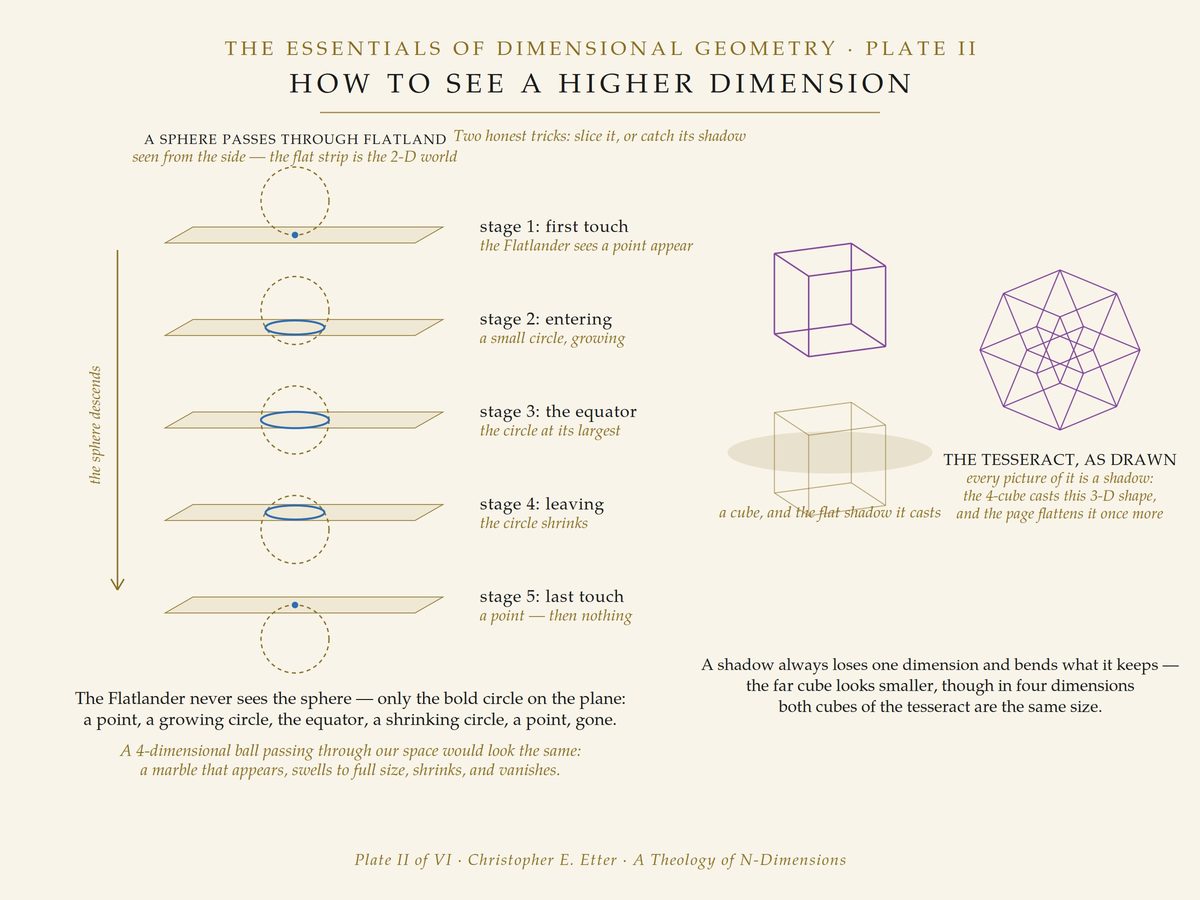
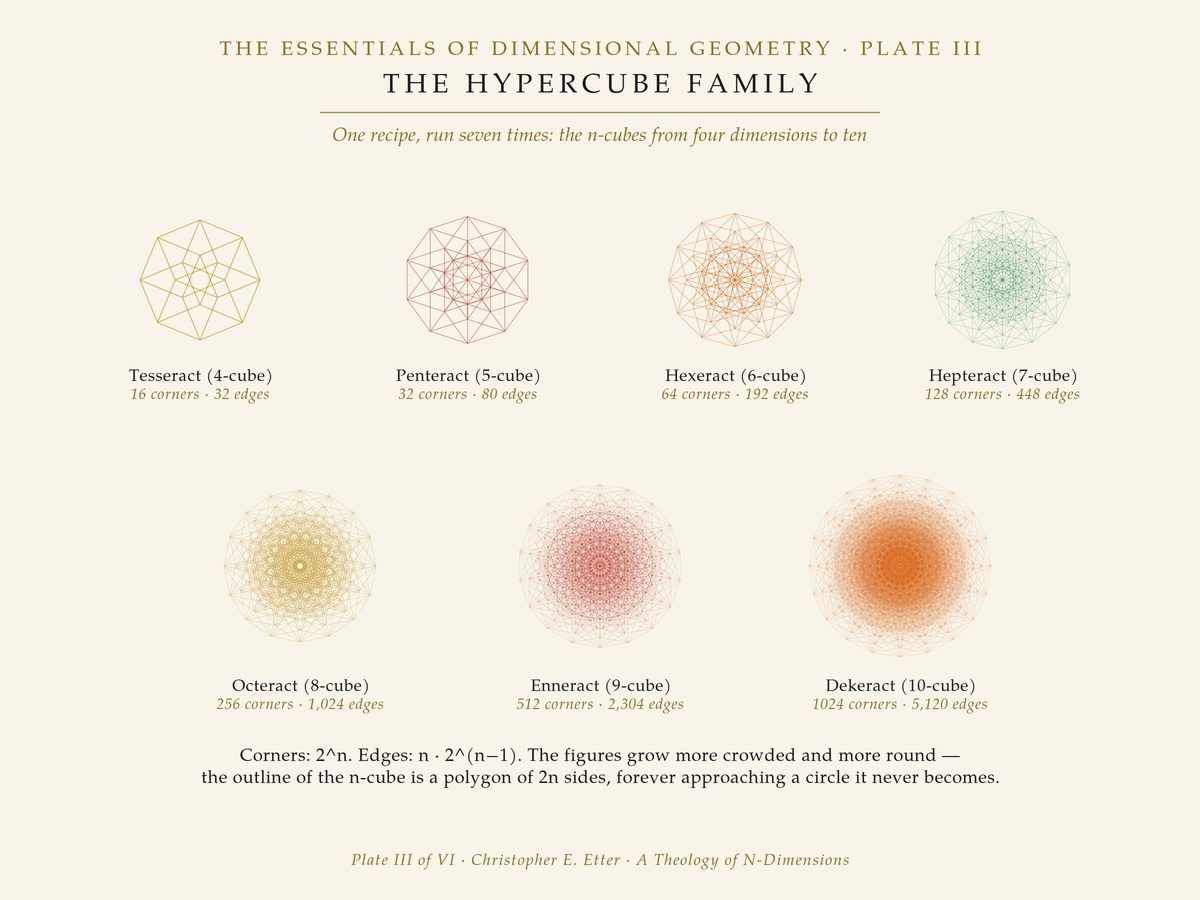
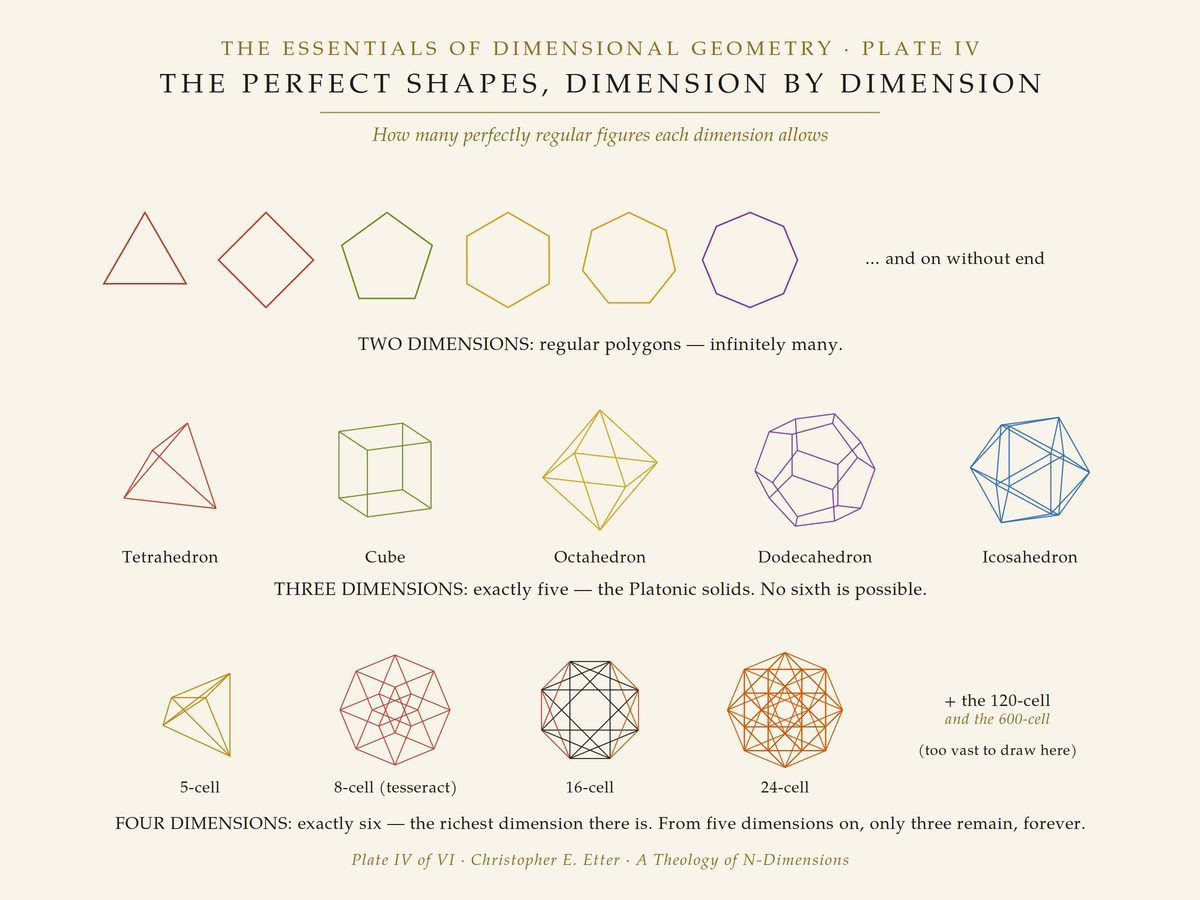
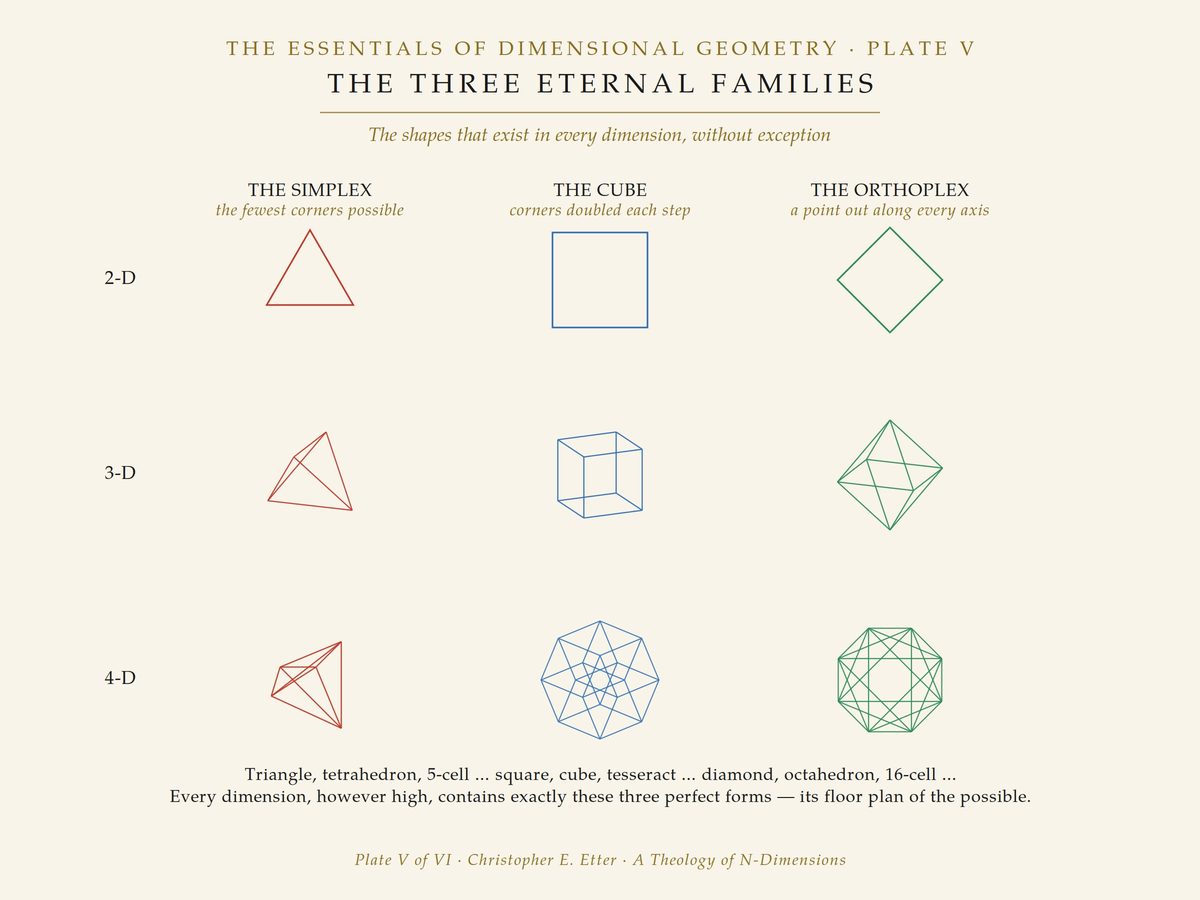
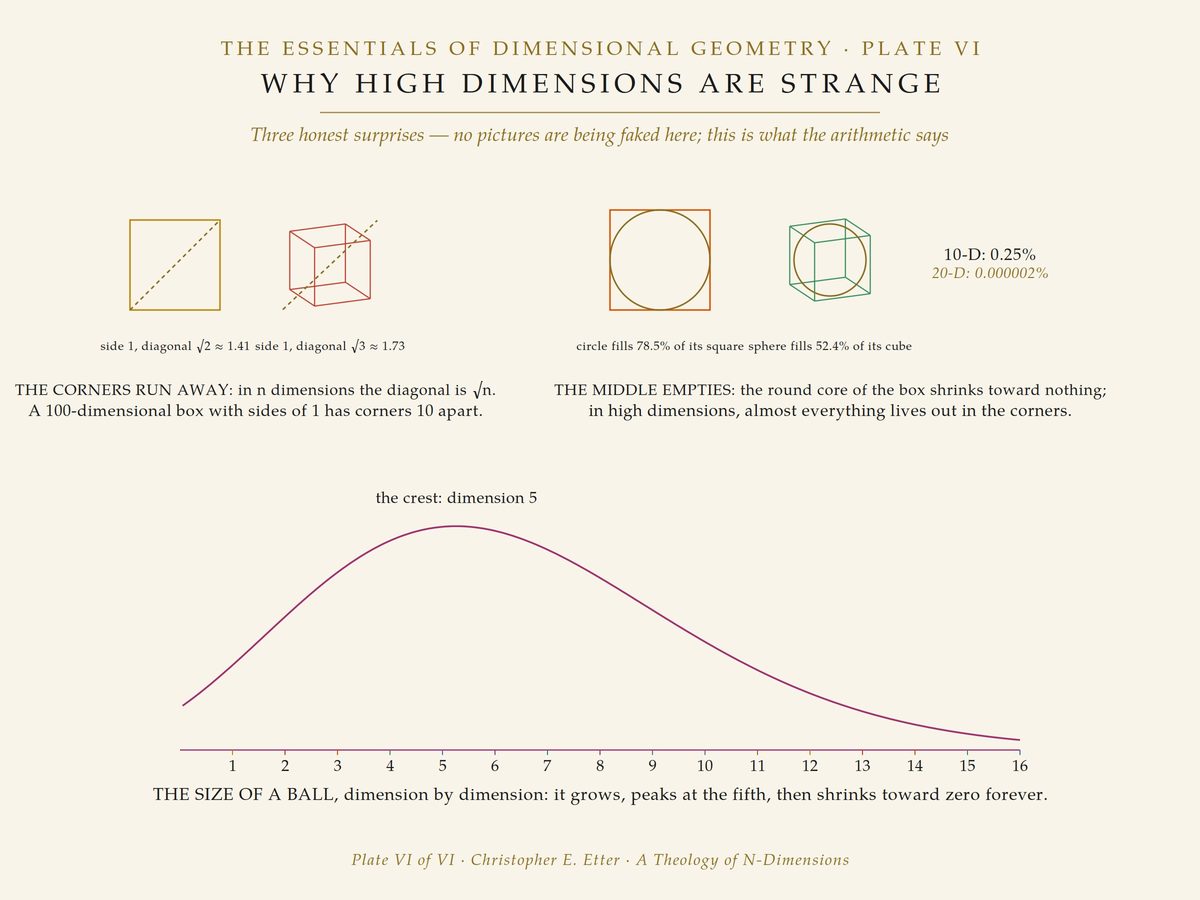
- The Essentials of Dimensional Geometry — six teaching plates: how dimensions are made, how a lower world can see a higher one, how the perfect shapes are counted, and how space grows strange in the heights.
- The Vanishing Measure — the interactive geometry of the crest: why the volume of the ball peaks at the fifth dimension and then dies forever.
- The Geometry of N Dimensions — the completely orthogonal, after Sommerville.
The Volume’s Studies
the papers gathered in the book
- The Ladder Inverted — Ein Sof as the dimensionless point, the supernals as the standing frame, Daath as the threshold event, Malkuth as the totality.
- The Simplicity of the Heights — the measure of the unit ball across the dimensions — its crest, its decline, its vanishing — as a formal theology of plenitude and limit.
- The Open Dimensions — compactness demoted; warping and localization; the ascent of properties through the stack.
- The Projection Hypothesis — the accelerometer argument and the bulk-geodesic mechanism: we see Severity every time something falls.
- The Forms and Their Transcriptions — whether the Sephiroth are dimensions, functions of mind, or the pattern of both: homology by common derivation.
- The Quartered Stations & The Quartered Heights — the internal and external offices of every station, and the heart as keeper of the boundary between the worlds.
- The Two Arrangements of the Elements — the ontological order of the worlds’ creation and the existential order of the Name and the year: two registers, one Tree.
- The Perpendicular Turns — the brain against the spine, the hemispheres against the axis: least resistance running on dimensional rails.
The Plates
the 15 plates of the volume
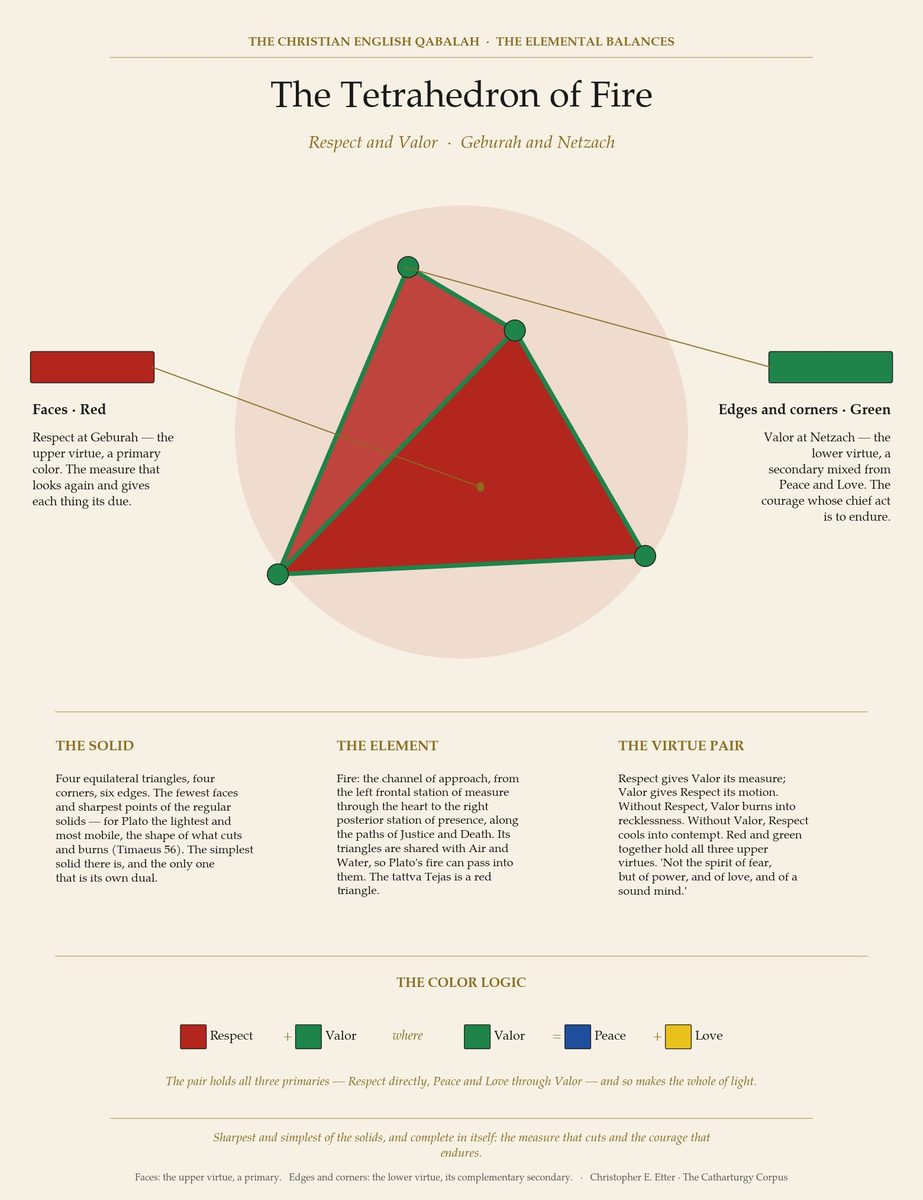
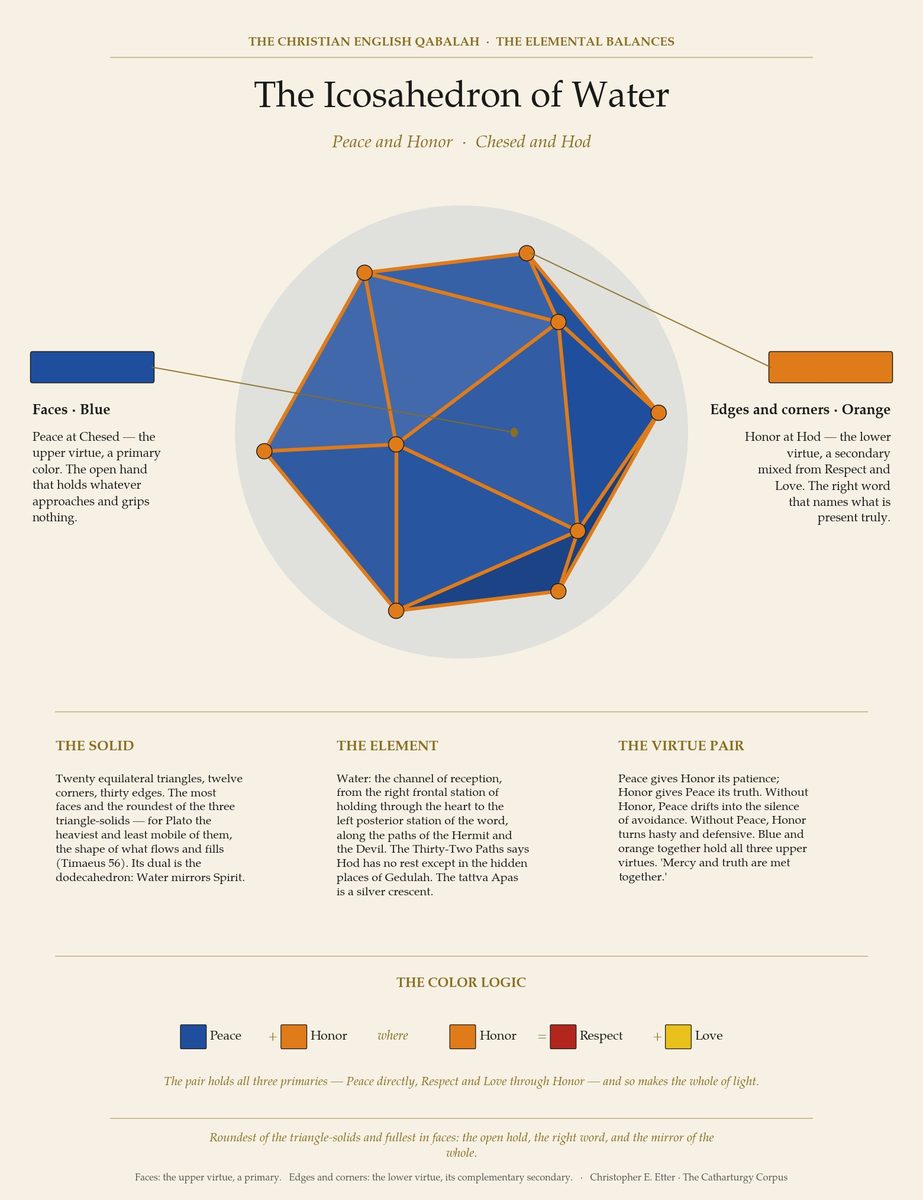
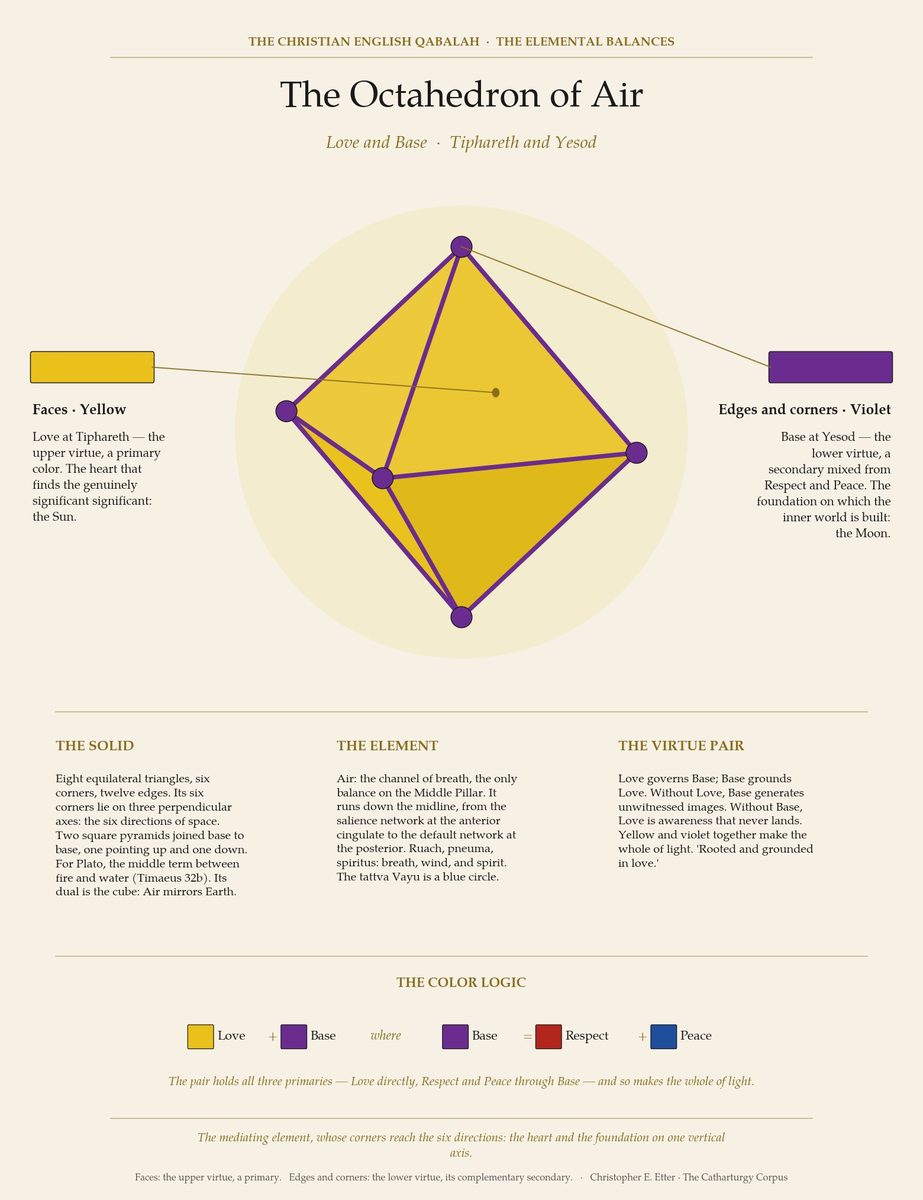
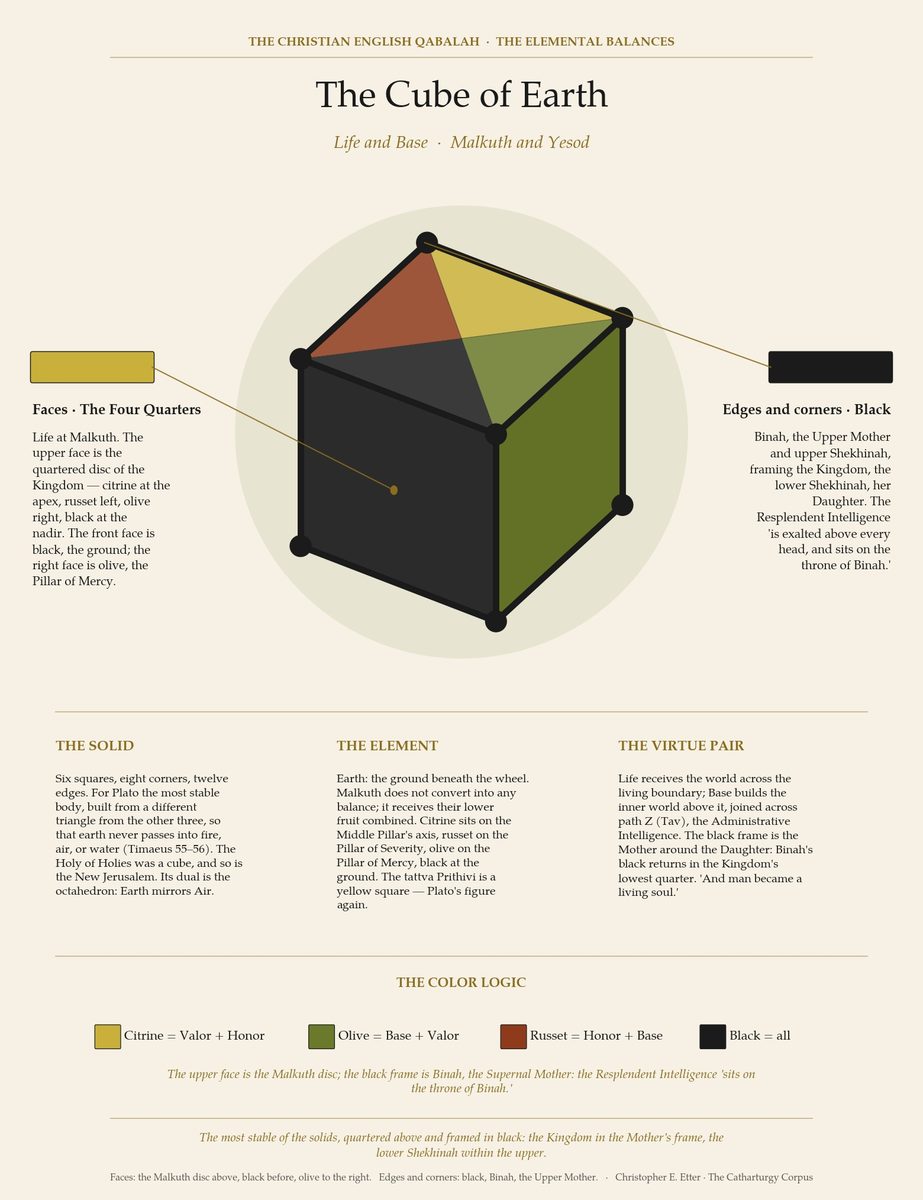
The Sephiroth are not in the brain, and they are not in the bulk; the brain and the bulk are in the Sephiroth.